Technology, Politics, Mind. Since 2014.
Watch

Silicon Canals on YouTube

The hidden machinery of money and power — the secret owners, staggering fortunes, and frauds behind the companies and institutions you think you know. Every film is built on court records, regulator filings, and original investigative reporting.

What’s building in

Cities

All cities →

Europe

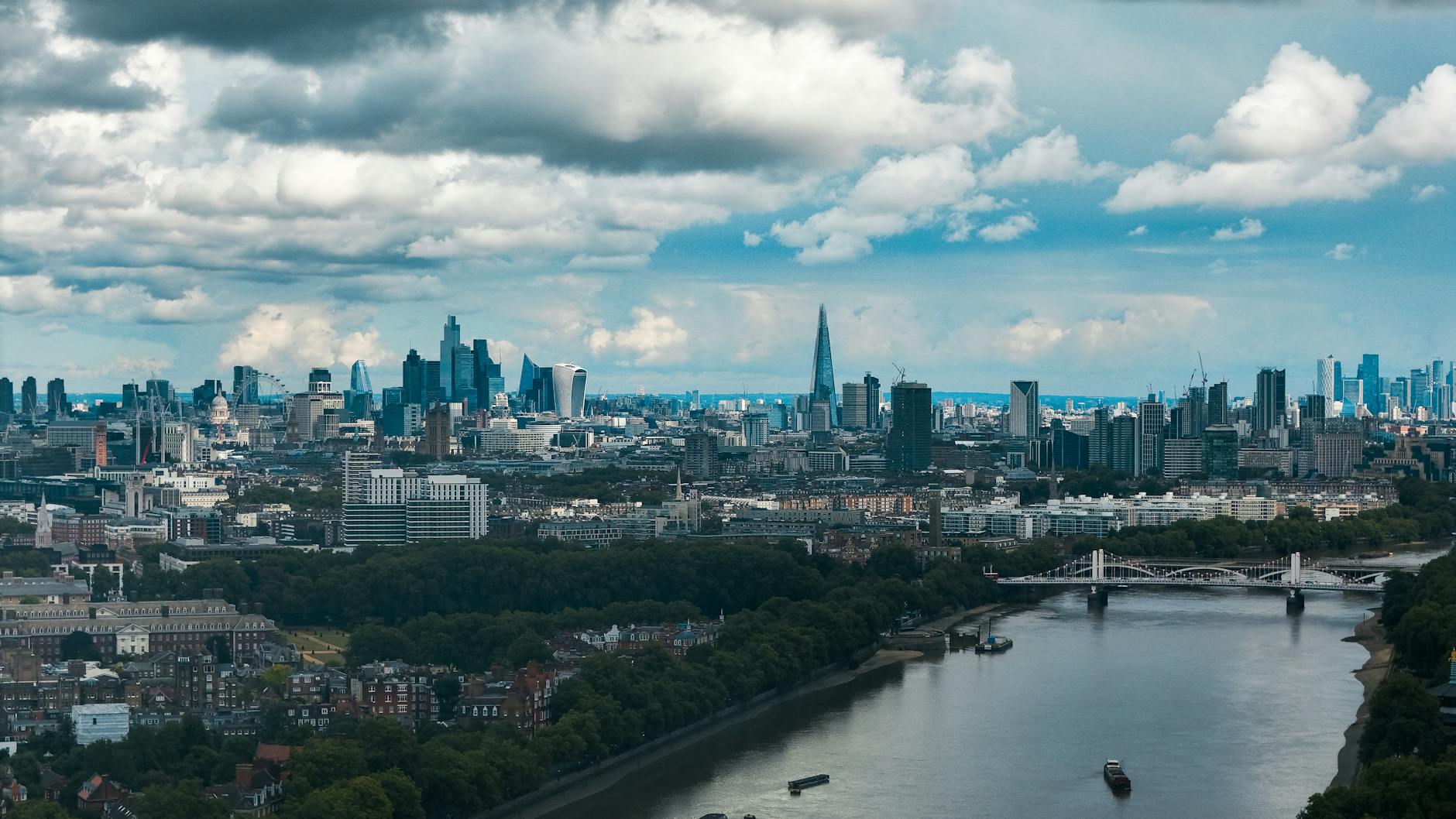
London

On May 24, 1844, Samuel Morse sat in the US Capitol and tapped out 'What hath God wrought' to his assistant Alfred Vail 60 kilometres away in Baltimore, a phrase chosen not by Morse but by Annie Ellsworth, the young daughter of a friend, who picked it out of the Book of Numbers and then traced every letter of it on the tape in ink herself

  1. How did a treaty agreed in 1987 and eventually ratified by every nation shrink a hole in the atmosphere the size of North America back toward 1980 levels?
  2. In 1939, a self-taught excavator named Basil Brown was digging a mound on Edith Pretty's estate in Suffolk when his trowel traced the outline of a 27-metre Anglo-Saxon ship whose timber had long since rotted, leaving only iron rivets holding the shape of a vessel in the sand

North America

New York

Gold can be forged in neutron-star mergers, but astronomers are still working out how much came from other cosmic sources

  1. Singapore's millionaire density hit 1 in 6 households — and the mental health data is telling a very different story about what that wealth is buying
  2. Nearly every plant on your plate is quietly chemically defended against being eaten — and a growing line of research suggests that faint, low-dose sting may be one of the underrated reasons a vegetable-heavy diet keeps you healthy

Asia

Singapore

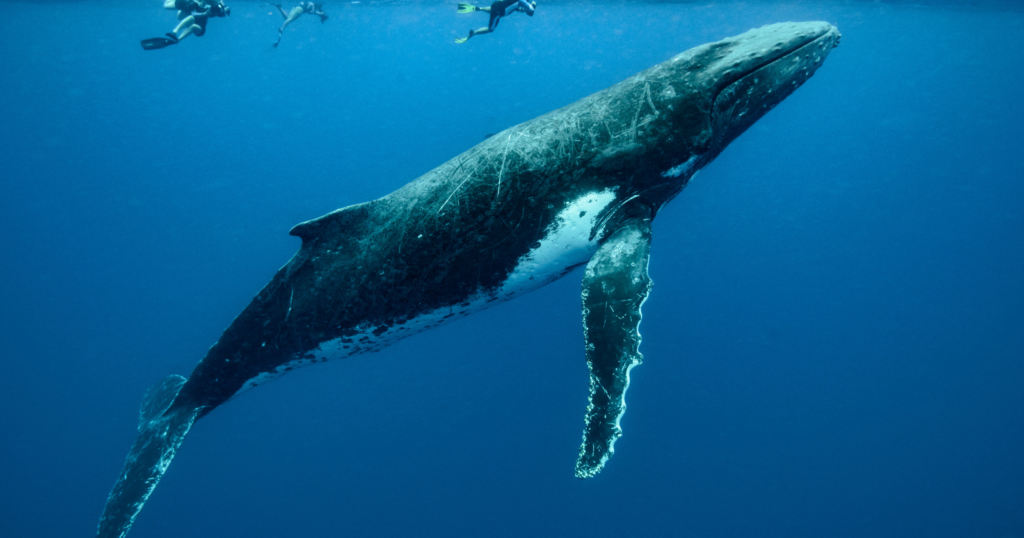
A 2026 study revealed how sperm whales stay suspended during their eerie vertical naps: they blow bubbles to stop their buoyant bodies from rising into the waves

  1. In 1944, an IBM machine called the Harvard Mark I clattered through a calculation for the Manhattan Project at three additions per second, fed by paper tape and operated by a young Navy lieutenant named Grace Hopper who took the graveyard shift more often than anyone and slept beside it on a cot, waking the moment the relays went quiet because a silent machine meant something had gone wrong
  2. Nobody talks about the layer underneath physical AI, and the man whose code runs on 6 billion devices just raised $5M to own it before the robot fleets arrive

Latin America

São Paulo

In 1816, a 35-year-old French physician named René Laennec rolled a sheet of paper into a tube and pressed it against a young woman's chest because he was too embarrassed to put his ear there, and the sound of her heartbeat through the cylinder became the first stethoscope

  1. A single bolt of lightning that crossed Texas, Louisiana, and Mississippi in April 2020 stretched 768 kilometres end to end, once the longest single flash ever recorded and roughly the distance from New York City to Columbus
  2. On September 9, 1947, Grace Hopper's team at Harvard pulled a dead moth out of the Mark II computer's relay, taped it into the logbook with the note 'first actual case of bug being found,' and preserved the page that gave software its oldest metaphor

Middle East

Tel Aviv

US hits Iranian nuclear site as Hormuz shipping stalls and troop deaths mount

  1. Roughly 80% of the cheese in the US and other major markets is now made with an enzyme produced by genetically modified microbes, not from calf stomachs — and most shoppers have no idea
  2. Iran wiped Stryker's devices, ShinyHunters defaced Canvas during finals, and DOGE allegedly uploaded every American's SSN to an unsecured server — and the connective tissue between these stories isn't what most analysts think

Editorial columns

Our columns

About the columns →

Technology

Canal Letter

SoftBank is putting $200 million into the excavator-automation startup Gravis Robotics, whose headline productivity figure was stated two different ways on announcement day, with no published method behind either version

Gravis says its retrofit kits deliver "up to a 30% boost" against peak manual operation. It also told Inc. the machines have delivered "about 30 percent on multiple projects" against human-operated equipment. The specialist Inc. asked wants to know what was measured.

  1. Cambridge Aerospace was just valued at $3.4 billion, less than two years after it was founded — and the two numbers that would let anyone test that valuation, the price of one Skyhammer and the size of its UK contract, have never been published as figures
  2. A federal judge ruled one Pentagon action against Anthropic unlawful, while a separate dispute continues
  3. Nadella pitches swappable AI models as Microsoft scales MAI models and Maia chips
All in Canal Letter →

Politics

Cabinet

Across 37,073 European Research Council applications, the same proposal scored higher with reviewers who shared the applicant's citizenship and country of work — and that match moved the score about seven times as much as a shared gender did

Two economists contracted by the ERC's own executive agency compared how a single proposal was scored by reviewers who matched the applicant and reviewers who did not. Sharing both citizenship and country of work moved the first-stage project score by 0.164 of a point on a five-point scale. The link to actual funding decisions is weaker, and correlational.

  1. The company behind Singha beer removed one of its heirs from every executive role days after an abuse allegation went public — a reckoning Asian family dynasties usually avoid
  2. South Korea approved single-stock leveraged ETFs, then banned new ones two months later — inside the margin unwind that pushed forced selling to seven times last year's pace
  3. The EU’s AI Act starts requiring chatbot and deepfake labels on August 2 — while its tougher rules on hiring, biometrics and migration are pushed back to December 2027
All in Cabinet →

Mind

Field Notes

In a month-long study of 136 couples, how well partners talked about money predicted how satisfied they were a month later, while how often they talked did not — and among the people who reported the least financial stress, talking about it more often tracked with their own satisfaction slipping

Two relationship researchers followed 136 couples through a single November, asking both partners every Sunday how often they had discussed money and how well it had gone. Conversation quality showed a link to how satisfied each partner felt at the end of the month. Frequency showed no such link. The study was not preregistered, and its authors call the analyses exploratory.

  1. In a 14-day diary study, the single adults who saw singlehood as room to grow were still more satisfied with being single the next day, while the activities they had done no longer showed up in those numbers — and in a separate weekly diary, half of those activities were done with friends
  2. Thinking it over tends to improve how people judge your character, mainly if they disagree
  3. A new study suggests the person who left your message unanswered tends to feel worse about it than you imagine, and worse still when the silence was accidental — in a scenario version of the situation, a one-line "Sorry, but I can't talk right now" narrowed the gap without closing it
All in Field Notes →

Funding

The Term Sheet

In 1975, young Kodak engineer Steven Sasson built the first self-contained digital camera, a 3.6-kilogram device that took 23 seconds to record a 0.01-megapixel black-and-white image onto cassette tape—and Sasson later summed up management’s initial reaction at the film giant as: “That’s cute—but don’t tell anyone about it.”

Sasson’s cassette-recording prototype proved digital photography could work. Kodak’s response was more complicated than one famous line, and so was its later failure.

  1. The archetypal high-growth founder isn’t a 20-year-old prodigy in a garage. A US Census study of 2.7 million founders found that those behind the fastest-growing 0.1% of new ventures were 45 on average—and a 50-year-old was roughly 1.8 times as likely as a 30-year-old to produce an exceptional-growth company.
  2. The Novo Nordisk Foundation retains voting control of Novo Nordisk and awarded DKK 11.8 billion in grants in 2025
  3. AI’s first visible employment shock may be hitting the bottom rung of the career ladder: by June 2026, employment among 22–25-year-olds in highly AI-exposed occupations was running 19% behind their less-exposed peers, largely because companies were hiring fewer juniors—not firing experienced workers—raising an uncomfortable question about who becomes tomorrow’s senior analyst, lawyer or coder.
All in The Term Sheet →

AI & Deep Tech

Machine Room

Between May and December 2025, the share of American students from middle school through college using AI for homework rose from 48% to 62%. Yet 67% believed heavier AI use harms students’ critical thinking—and only about one-third said their school had established a schoolwide AI policy.

A RAND survey found rapid growth in students’ homework AI use alongside rising concern about critical thinking and a fragmented school policy landscape.

  1. See’s says it maintained its ingredient standards during Second World War rationing and sold less candy; the record does not establish what every rival did
  2. Cursor went from $100 million in annualized revenue to $2 billion in just 13 months—a twentyfold surge that outpaced the early growth of Slack and Zoom and ranks among the fastest revenue expansions ever reported by a software company.
  3. Pinch of Yum says Facebook referrals rose after it began posting three times a day; the figures come from an affiliated, first-party analysis
All in Machine Room →

Free field brief

The Empire File

How money, ownership, and power actually move behind the companies you think you know. Built for people who watch our documentaries. Sundays you also get The Undercurrent.

Free PDF. Also The Undercurrent. Unsubscribe anytime.